


There is a version of my story that would be easier to tell.
It’s the version where healing is inspiring.
Where finding my voice feels empowering.
Where breaking cycles sounds noble and courageous and everyone claps from the sidelines while I step into the woman I was always meant to become.
But that isn’t the story I know.
The story I know is that every act of truth-telling has come with a cost.
Some of those costs were small.
Others felt unbearable.
Because when you come from a family system built on silence, the person who begins speaking becomes a threat.
Not because they are dangerous.
Because they are disruptive.
I know this because I became her.
The truth teller.
The black sheep.
The one who asked questions.
The one who refused to pretend.
The one who could no longer participate in the collective agreement that said:
“That’s just how things are.”
I heard that phrase my entire life.
That’s just how he is.
That’s just how she is.
That’s how it’s always been.
Don’t make a big deal out of it.
Pay no attention.
Keep the peace.
Move on.
Stay quiet.
And yet every cell in my body knew something different.
Even as a child.
Long before I had language for trauma.
Long before I understood family systems.
Long before I knew words like abuse, gaslighting, addiction, or intergenerational trauma.
Something inside me knew.
This isn’t right.
And that knowing would shape the rest of my life.
Because silence is rarely born in a single generation.
It is inherited.
Passed down like an heirloom nobody wants to claim.
I often think about my grandmother.
A girl of fourteen taken from her family and made a bride.
A child raising children.
A woman who would give birth to nine children while carrying burdens that were never hers to carry.
A woman who survived.
A woman who endured.
A woman I loved with my whole heart.
A woman whose stories were never fully told.
I think about the grief she swallowed.
The fears she carried.
The dreams she never had the opportunity to speak aloud.
And I wonder how many of her tears became the waters my family would later swim in without ever knowing where they came from.
Because trauma has a way of travelling through generations.
Not only through what happened.
But through what could never be spoken.
My grandfather died suddenly when the youngest of nine children was only two years old.
My mother, the oldest daughter, 9 years old, stepped into responsibility before she had the chance to be a child herself.
She left for the city to work as a housemaid so she could help support the family.
She learned survival.
Just as her mother had.
And eventually those survival strategies became family culture.
Not because anyone intended harm.
Because pain that isn’t healed becomes inheritance.
And by the time that inheritance reached me, it carried generations of silence.
Generations of secrets.
Generations of grief.
Generations of women who had learned that survival often required swallowing the truth.
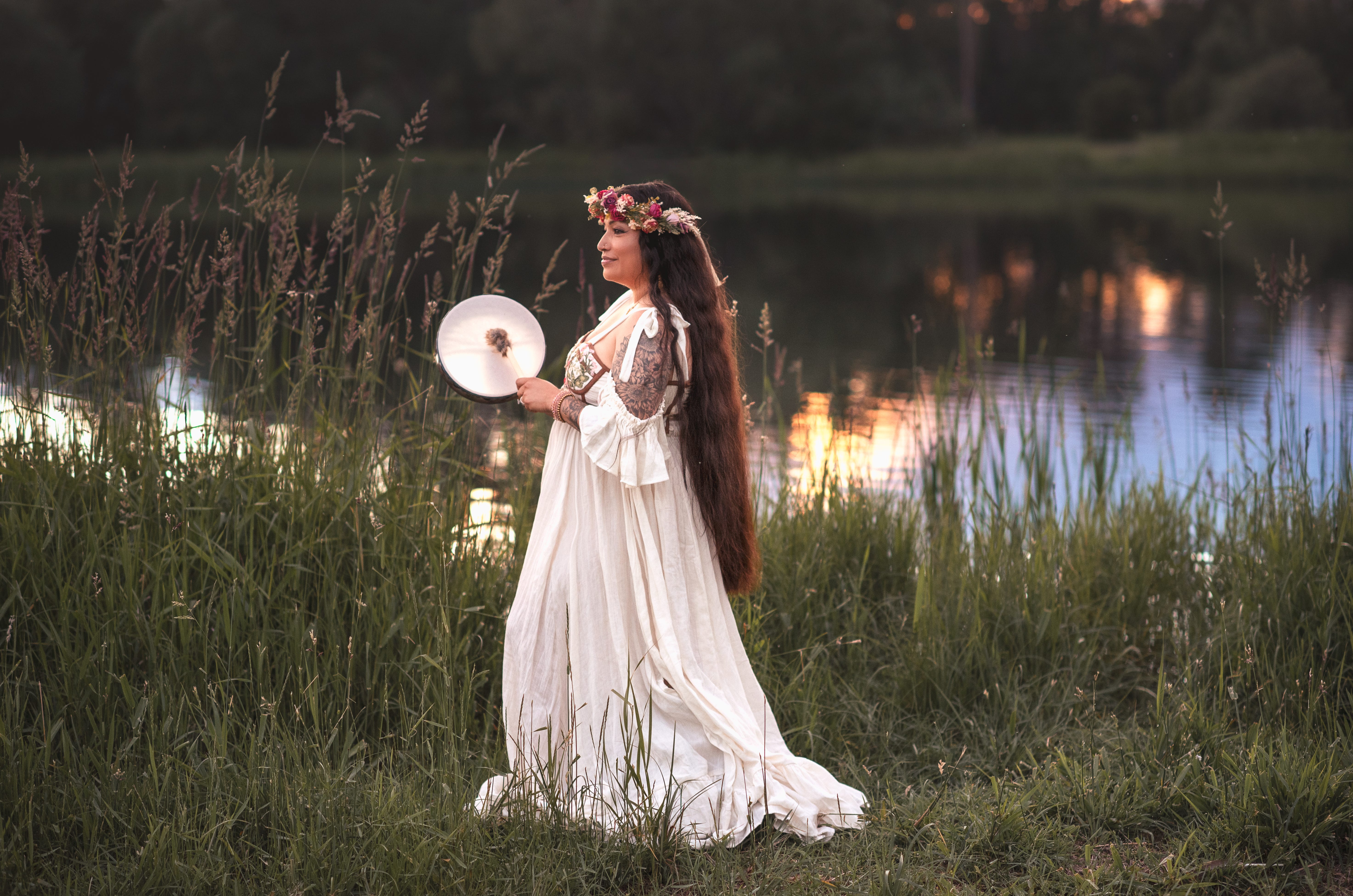
The First Lesson
I learned very early that some truths were not meant to be spoken.
I was four years old.
The details themselves are not the point of this story. What matters is what happened afterward.
What matters is that I knew something was wrong.
My body knew.
My tears knew.
My nervous system knew.
And when I finally found the courage years later to tell the truth about what had happened, the truth was not welcomed.
It was denied.
I was called a liar.
I was called an attention seeker.
Rumors spread.
Family members made jokes.
The person who harmed me remained protected while I learned a devastating lesson:
Speaking up comes with consequences.
So I did what many children do when they discover the truth is unsafe.
I went silent.
The pain didn’t disappear and it had nowhere to go.
I carried that silence into adolescence.
Into relationships.
Into my relationship with myself.
By nine years old, anxiety and depression had already settled into my body. I constantly wondered why I felt so different from everyone around me. Why did everything hurt so much? Why did I feel everything so deeply? Why was I always being told I was too sensitive, too emotional, too dramatic?
The message was always the same.
Be quieter.
Need less.
Feel less.
Speak less.
So when alcohol entered my life at fifteen, it felt like relief.
For the first time, I found something that could drown out the noise.
The memories.
The fear.
The grief.
The loneliness.
The confusion.
Alcohol became my companion for the next fifteen years.
People knew me as the life of the party.
The wild one.
The fun one.
The one who could always make people laugh.
Very few people knew about the darkness underneath.
The self-destruction.
The hopelessness.
The dangerous situations.
The toxic relationships.
The belief that maybe I wasn’t meant to survive any of it.
Looking back now, I can see that addiction wasn’t my problem.
Addiction was my survival strategy.
Silence had become unbearable.
And numbing became the only language I knew.
Then came the moment that changed everything.
Not all at once.
Not dramatically.
Just an inner knowing.
After two DUIs, after years of chaos, after countless mornings waking up disconnected from myself, I reached a point where I knew with absolute certainty that I was playing with fire.
I knew where this path ended.
And despite everything I had survived, despite three previous attempts to leave this world, I realized something surprising.
I didn’t want to die.
I wanted the pain to stop.
There is a difference.
Recovery became the first time I chose myself.
The first time I chose life.
The first time I stopped running.
And what I discovered almost immediately was that sobriety did not erase my wounds.
Sobriety introduced me to them.
It introduced me to the little girl I had spent fifteen years trying to outrun. The alcohol had disappeared, but the fear remained. The shame remained. The abandonment remained. The hypervigilance remained. Every survival strategy that had once kept me alive was still living inside my body, anxiously waiting for the next perceived threat. I entered recovery believing that if I could stop drinking, I would finally become free. Instead, I found myself standing face to face with every wound I had spent years trying not to feel.
I also carried an expectation that now feels almost tender when I look back on it.
The Wounded Healer
I believed that if my family saw me healing, they would become curious about their own healing. I imagined that my recovery would inspire conversations we had never been able to have before. I thought honesty would create honesty. I thought accountability would create accountability. I thought love would naturally move us toward repair.
I had no idea that healing changes one person long before it changes an entire system.
Everyone needs healing.
Not everyone wants it.
That realization broke my heart.
For years I held onto hope… the expectation, that my relationship with my Dad would become something different. I had forgiven him many times over. I had done the work of understanding trauma. I had learned about nervous systems, addiction, intergenerational pain, family systems, compassion.. SO much compassion, I no longer needed perfection from him. I only longed for honesty. I longed for one conversation where my experience could exist without denial. I longed for one moment where accountability could replace defensiveness.
That moment never came.
Instead, I slowly realized that every attempt to speak honestly was met with the same familiar choreography I had known since childhood. Harm would occur. Emotions would rise. Silence would settle over everyone like a heavy blanket. A few days would pass, and somehow we were all expected to behave as though nothing had happened.
For most of my life, I participated in that dance because I didn’t know another way.
Recovery changed that.
Healing made it impossible for me to unknow what my body already knew.
I could no longer confuse peace with pretending.
Eventually, I made the most painful decision of my life.
I chose no contact with my Dad.
Choosing Me
People often imagine that decisions like this are made in anger.
Mine wasn’t.
It was made in deep grief.
It was made after years of hoping.
After years of praying.
After years of trying.
After years of shrinking myself to preserve a relationship that required me to abandon my own reality.
The decision did not feel empowering.
It felt devastating.
It also revealed something I never expected.
Healing doesn’t only change one relationship.
It changes every relationship connected to it.
Some people understood.
Others couldn’t.
Some relationships deepened.
Others painfully dissolved.
One of my siblings eventually told me they could no longer attend my speaking engagements because they couldn’t sit in the audience while I spoke about our Dad.
That conversation has stayed with me.
Not because it made me angry.
Because it made me profoundly sad.
I wasn’t speaking to shame anyone.
I wasn’t speaking to punish anyone.
I was simply refusing to continue protecting silence at the expense of my own soul.
The grief of those losses still comes in waves.
There are mornings when I still wish my kids knew a different version of our family. There are moments when I imagine birthdays and holidays unfolding another way. Healing has never removed my capacity to love the people I’ve had to create distance from.
If anything, it has expanded it.
Love and boundaries have learned to live in the same body.
That has been one of the greatest lessons of my life.
Your Story Your Voice as Your Medicine
Around my second year of recovery, I joined a support group for adult survivors of childhood abuse. It was one of the first spaces where I experienced what happens when people stop performing wellness and start telling the truth. We didn’t need to convince each other that our pain was real. We simply witnessed one another. Something inside me softened in that room. For the first time, I realized I wasn’t carrying an experience unique to me. I hated that so many people knew this kind of pain, and at the same time I felt an immense relief that I no longer had to carry it alone.
Looking back now, I realize that circle planted the first seed for everything I would later build.
I began sharing pieces of my story, carefully at first. A reflection on social media. A glimpse into recovery. A truth I would have never dared speak aloud years earlier. Then something beautiful started happening. Women I had never met began writing to me. They trusted me with stories they had never shared with anyone else. Some eventually became clients. Some became lifelong friends. Some simply needed one conversation to know they weren’t crazy, broken, or alone.
Every message taught me the same lesson.
Our stories become bridges.
The very thing we spend years trying to hide often becomes the place where someone else finally feels seen.
Over the last several years, I’ve had the privilege of walking alongside remarkable women. Women like a dear long-term client of mine, who once reflected back to me something I had never fully seen in myself. She told me that I embodied the transformation she was working toward. She wasn’t talking about perfection. She was talking about congruence. She could see a woman who was still healing, still grieving, still learning, while choosing to lead anyway.
Her words stopped me.
Because I realized I had spent years searching for someone exactly like that.
A woman who had survived.
A woman who had lost.
A woman who had rebuilt.
A woman who wasn’t standing on a stage because her life had been easy, but because she had walked through fire and refused to let the fire have the final word.
I couldn’t find her.
So little by little...
I became her.
Not for my own sake.
For the women who were still searching.
For the women in my lineage
Lately, inside Reclaim and Rise™ and The Sovereign Seasons™, spaces I gratefully get to facilitate, I notice the same conversation surfacing again and again. It doesn’t matter whether the women are therapists, entrepreneurs, mothers, artists, coaches, executives, or creatives. Eventually, every conversation circles back to voice.
“What will my family think?”
“What if people misunderstand me?”
“What if I lose relationships?”
“What if I disappoint people?”
“What if my story hurts someone?”
Those questions aren’t really about visibility.
They’re about belonging.
They’re about whether it’s possible to tell the truth without losing love.
I know those questions intimately because I have lived them.
Studying Human Design, Gene Keys, and woman-centered coaching didn’t give me a new identity. They gave language to a life I had already been living. For years I believed my voice made me difficult. Today I understand that my voice has always been one of the ways life has asked me to serve. My curiosity, my questioning, my love of stories, my relentless desire to understand people rather than judge them… none of those qualities are accidents. They are part of the medicine I carry.
That realization became the seed for Voice of the Lineage™.
It’s not about me wanting to teach women how to become louder.
I wanted to create the space I spent decades searching for.
A place where women could remember that their voice did not begin with them.
That every woman who speaks today carries generations of women who couldn’t.
Every time I think about my abuelita, I wonder what she would say if she could see me now.
Sometimes I imagine telling her that the little girl who once believed silence was the safest choice now spends her life helping women remember their voices.
Sometimes I imagine her smiling that mischievous smile that always made me laugh.
Sometimes I imagine her saying nothing at all.
Just reaching for my hand.
The older I become, the less I believe this work belongs to me.
I believe it belongs to all the women who came before me.
To the women who survived without language.
To the women who loved as best they could while carrying burdens no one should have to carry.
To my mother.
To my grandmother.
To the little girl I once was.
To my daughter, who is growing up believing her voice matters.
To my sons, who are learning that tenderness and truth belong to them too.
I used to believe freedom meant finding my voice.
Now I understand something different.
Freedom arrived the moment I decided my voice was worth the cost.
The cost has been real.
So has the freedom.
And if there is one thing I know now with every fiber of my being, it is this:
Silence may be inherited.
So is courage.
Every time one of us chooses truth over performance, repair over pretending, and authenticity over belonging at any cost, the lineage changes.
Not someday.
Now.
And perhaps that is how healing has always moved through families.
One brave voice at a time.
I resonate with so much of your story. You have so many lines that are pearls of wisdom. Here is to the truth tellers, the black sheep, the women breaking the chains of generational trauma and speaking it into existence out of the shadows where healing can happen. 🩵 Thank you for speaking and doing the work.
Thanks for sharing, so many truth bombs here.